About
I’m a cofounder at BlankBio working to build RNA foundation models at the intersection of machine learning and biology. I am passionate about the field because the consequences of discovery are significant. Biology is all around us, yet we understand so little of it.
Prior to starting BlankBio I did my PhD at the University of Toronto, working on self-supervised learning for biological sequences. Before that I worked as a computational biologist at Deep Genomics, where I translated foundational research in machine learning and genomics into pre-clinical applications.
My interests are in RNA biology and therapeutics, representation learning for biological sequences, and how to make AI tools useful for scientists. I am broadly curious and would love to discuss new and ongoing projects.
Writing
RSSOn Being a Formidable Biotech Founder
A year after YC Demo Day, thinking on what it means to be a formidable founder in biotech.
PhD in the Shifting Sands of 2020s Computational Biology
Reflections on two paradigm shifts during a computational biology PhD: foundation models in genomics and LLMs as research tools.
Writing
On using writing to sharpen thinking, why communication is the under-appreciated half of science, and starting a public writing practice during grad school.
Research Timeline
Ladon Technical Report: A Transcriptomic Foundation Model for Clinical Outcomes
BlankBio Technical Report
We introduce Ladon, a 3B-parameter transcriptomic foundation model built for clinically relevant tasks like predicting progression-free survival and treatment response. Unlike traditional tools, Ladon captures recurrent biological mechanisms across broader external transcriptomics cohorts to extract additional signal and generalize to unseen clinical trials.
Orthrus: toward evolutionary and functional RNA foundation models
Nature Methods (2026)
Published in Nature Methods. Orthrus is a Mamba-based mature RNA foundation model pre-trained using a novel self-supervised contrastive learning objective with biological augmentations from splice isoforms and orthologous genes.
Co-founded blank.bio & Accepted into Y Combinator
Y Combinator (S25)
Co-founded blank.bio, we are building RNA foundation models, and were accepted into the Y Combinator Summer 2025 batch.
mRNABench: A curated benchmark for mature mRNA property and function prediction
bioRxiv (in review)
We present mRNABench, a comprehensive benchmarking suite for mature mRNA biology that evaluates the representational quality of embeddings from self-supervised nucleotide foundation models.
On the Scalability of GNNs for Molecular Graphs
Advances in Neural Information Processing Systems (NeurIPS 2024)
We analyze the scaling behavior of message-passing networks, graph Transformers, and hybrid architectures on the largest public collection of 2D molecular graphs, demonstrating that GNNs benefit tremendously from increasing scale.
How molecules impact cells: Unlocking contrastive phenomolecular retrieval
Advances in Neural Information Processing Systems (NeurIPS 2024)
We propose MolPhenix, a model that learns a joint latent space between molecular structures and cellular morphology, significantly improving zero-shot molecular retrieval for drug discovery.
NeurIPS 2024 Workshop - Foundation Models for Science
🏆 Best Paper Award
IsoCLR: Splicing Up Your Predictions with RNA Contrastive Learning
ICML 2023 Workshop on Computational Biology
Presented at the ICML Workshop on Computational Biology.
Robustness to Adversarial Gradients
ICML 2022 Workshop on Pre-training
We evaluate minima sharpness by taking an adversarial step and measure the change in loss.
Concerto: A graph neural network approach for molecule carcinogenicity prediction
Bioinformatics / ISMB 2022
Our publication was accepted to Bioinformatics and I got to present our work at ISMB 2022.
Started PhD
University of Toronto
I started my PhD at University of Toronto with Brendan Frey and Bo Wang!
ATP7B variant c.1934T > G p.Met645Arg causes Wilson disease by promoting exon 6 skipping
NPJ Genomic Medicine
We demonstrated that a specific ATP7B variant, prevalent in Wilson disease, causes a splicing error leading to loss of function, clarifying its pathogenic mechanism.
Science Communication
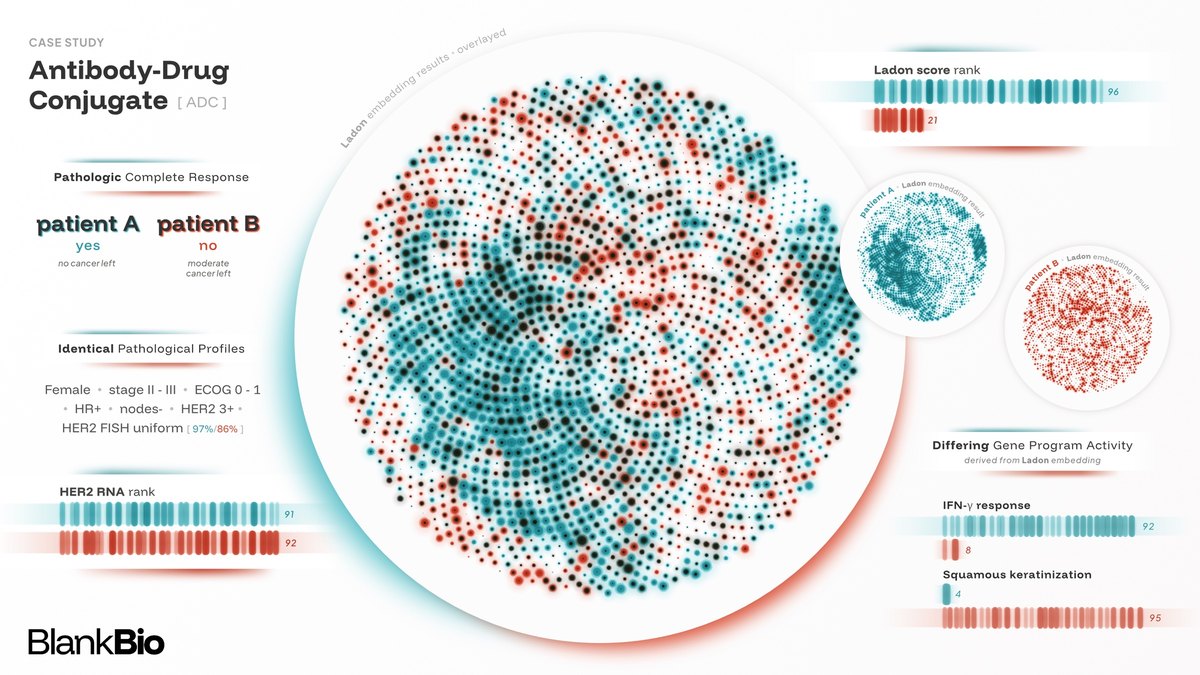
Introducing Ladon: An RNA Foundation Model for Predicting Patient Outcomes
Our announcement introducing Ladon, a transcriptomic foundation model built at BlankBio to predict disease trajectory, progression-free survival, and treatment response by capturing recurrent biological mechanisms across broader cohorts.
Orthrus: Towards Evolutionary and Functional RNA Foundation Models
In this work we train a Mamba based model to learn mature mRNA representations using contrastive learning. Our augmentations consist of orthologous, and alternatively spliced transcripts.

MolPhenix or How Molecules Impact Cells: Unlocking Contrastive PhenoMolecular Retrieval
We worked with folks from Recursion and Valence to create MolPhenix! It's a novel approach for learning the effects of concentration and molecules on cell morphology using large-scale phenomics data. To do that we innovate on the contrastive learning objective with the S2L loss.
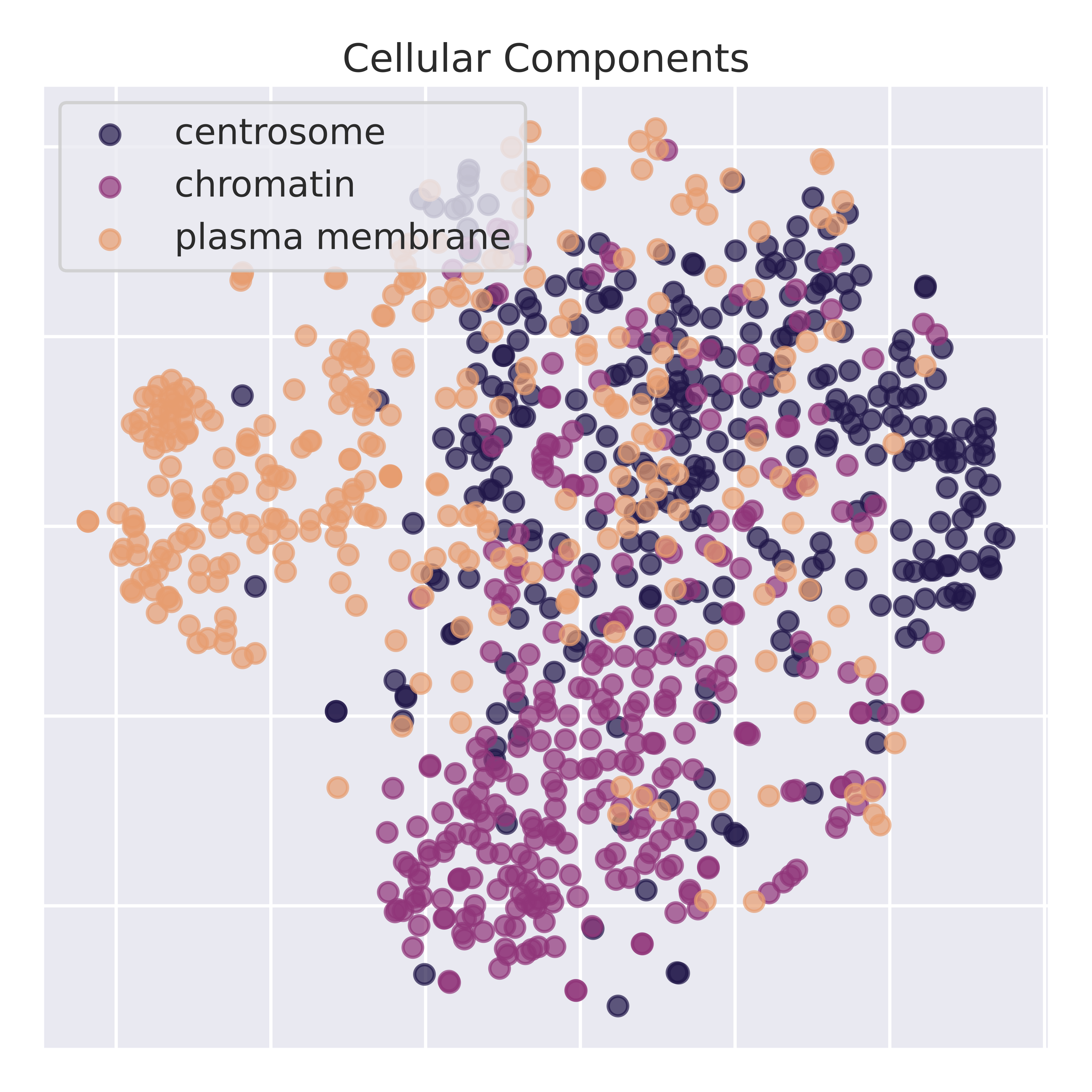
IsoCLR: Splicing up your predictions with RNA contrastive learning
This is a small explainer on IsoCLR or Splicing Up Your Predictions with RNA Contrastive Learning!

Concerto: A graph neural network approach for molecule carcinogenicity prediction
I'd like to give a brief explanation for the motivation and the work done in our publication Concerto: a graph neural network approach for molecule carcinogenicity prediction.

I was a guest on a podcast: Statistically Insignificant
We recorded a podcast with my friend Erik Drysdale covering advancements in genomics over the last 20 years, state of predictive system in molecular biology, and a little bit of personal history!
Talks
Orthrus: Towards Evolutionary and Functional RNA Foundation Models
MLCB 2024 Oral Presentation
An oral presentation of the Orthrus paper at the Machine Learning in Computational Biology (MLCB) workshop.
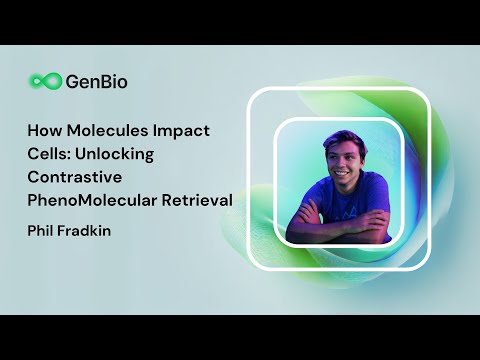
MolPhenix: A Multimodal Foundation Model for PhenoMolecular Retrieval
GenBio Invited Talk (2024)
An invited talk at GenBio discussing MolPhenix and its applications in phenomolecular retrieval.
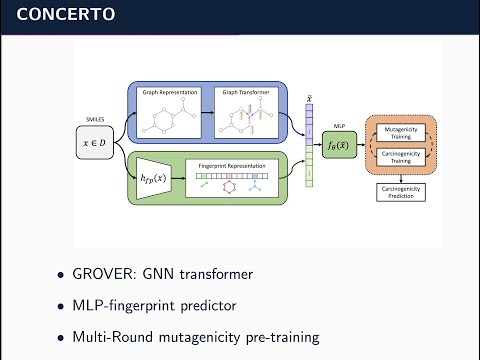
Concerto: A Graph Neural Network for Molecule Carcinogenicity Prediction
ISMB 2022 Oral Presentation
Pre recorded presentation of the Concerto paper prepared for the ISMB 2022 conference.
